

Misclassification = Algorithm Misfire
How placing your book beside giants in the wrong category tanks your CTR and conversions
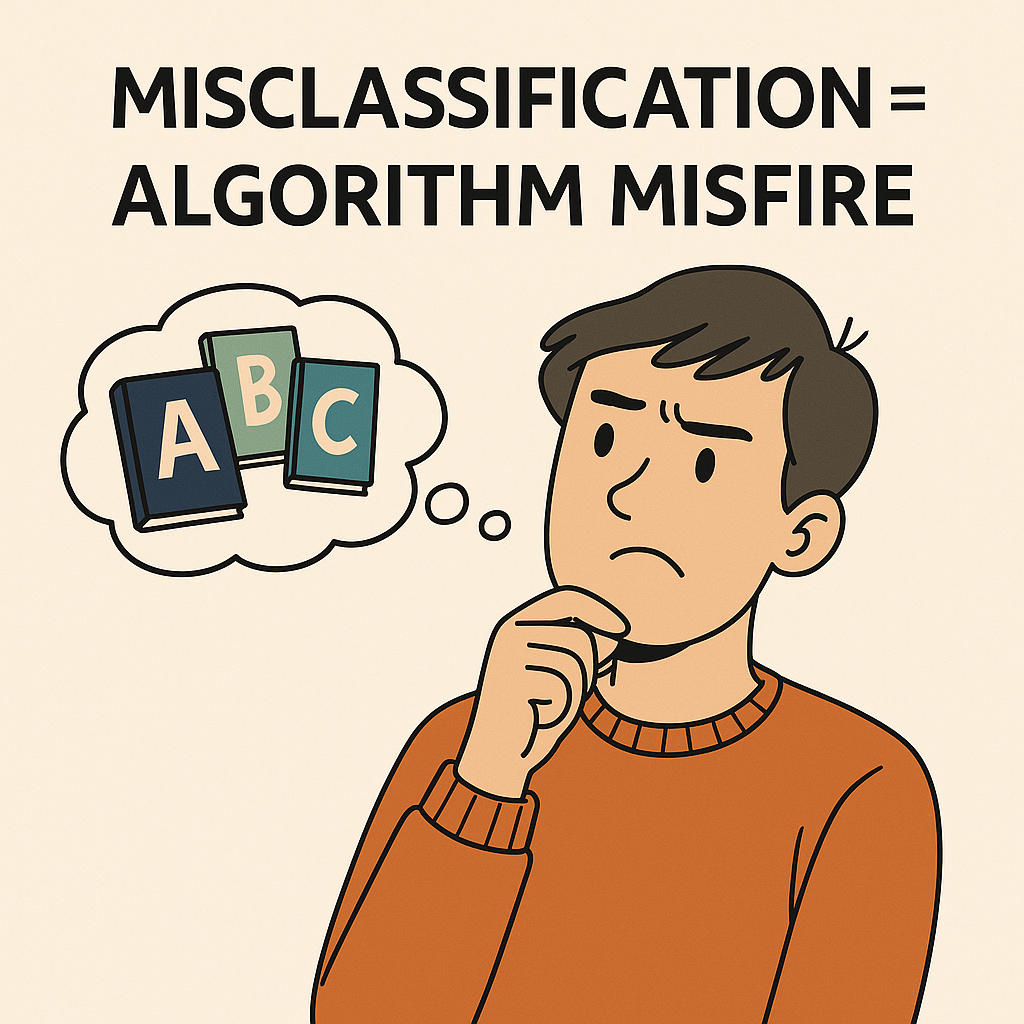
There’s a moment every author faces when they check their category placement and think, “Why am I competing with these books? How did I end up here?”
And right behind that moment comes the quiet panic: “Is this why my book isn’t moving?”
Most of the time, the answer is yes. Because when Amazon misclassifies your book, everything from CTR to conversions gets affected long before you notice the damage.
Most authors expect categories to be harmless — just labels on a digital shelf. But Amazon treats them very differently.
Categories determine your competitive landscape, your ranking signals, and which readers decide whether you get a second chance or disappear onto page nine.
Misclassification isn’t a cosmetic problem. It’s an algorithm misfire.
When You’re Shelved Beside Giants, You Don’t Stand a Chance
Imagine a brand-new author with a quiet, introspective book being placed beside the biggest, loudest bestsellers in the category.
Readers scrolling those pages aren’t looking for new. They’re looking for familiar.
Your book becomes an outlier. Not because it’s weak, but because the surrounding ecosystem doesn’t match what you offer.
Here’s what happens next.
Readers skip your cover
Not because it’s bad, but because it doesn’t match what they expect from that specific shelf.
Your CTR drops
CTR is Amazon’s way of measuring first-glance interest.
Low CTR signals low relevance.
Your conversions slide
If people don’t click, they don’t buy.
Conversions sink based on a single misplaced decision.
Amazon interprets the silence
The system reads low CTR and low conversions as a relevance problem, not a category error.
And once Amazon thinks you’re a weak match, visibility becomes harder to earn back.
This is how a single misclassification snowballs into a stalled book.
Why Misclassification Hurts More Than Low Traffic
Low traffic is a slow burn. Misclassification is immediate damage.
Here’s why it hurts:
1. You enter the wrong competitive arena
You’re being compared to top-selling giants whose audience isn’t looking for your tone or pacing.
2. The wrong readers bounce quickly
A bounce rate spike is one of Amazon’s strongest negative signals.
3. The algorithm stops testing you
Amazon won’t show you to new readers if early ones behaved like you were irrelevant.
4. Recommendations dry up
Also-bought clusters crumble. You lose the organic pathways that fuel steady discovery.
5. Your ranking becomes distorted
Even decent sales don’t reflect well when competing in the wrong ecosystem.
Misclassification is like entering the Olympics when you were supposed to be running a local marathon. The scale is off. The expectations are off.
The audience is off.
How to Prevent an Algorithm Misfire
You can’t force Amazon to pick a perfect category. You can guide the algorithm.
Focus on these clarity anchors:
• Choose categories that match your book’s emotional reality, not the one you wish it belonged to
• Align keywords with reader intent, not author aspiration
• Use a cover that reflects your true subgenre, not a broader shelf
• Write a description that signals one clear audience, not a mixed one
• Avoid trend-chasing categories that don’t match your tone
• Keep your early traffic clean, so Amazon receives a stable signal
When these elements align, Amazon sees you clearly. It places you among books your readers already love. Your CTR rises. Your conversions normalize. Your visibility stabilizes. Clarity becomes your competitive advantage.
Final Thought
Misclassification is one of the fastest ways to sabotage your discoverability, even when your writing is strong and your marketing is solid. You cannot convert readers who weren’t looking for your kind of book in the first place. But when your metadata sends a consistent message — when cover, keywords, categories, and description point in the same direction — Amazon stops guessing.
It shelves you beside the right books. It introduces you to the right readers. Suddenly the numbers start making sense.
Your book doesn’t fail because it’s small. It fails when it’s standing in the wrong crowd.
Put it in the right room, and everything starts moving.