

Why Pricing at 99 Cents Often Destroys Nonfiction Sales Instead of Helping Them
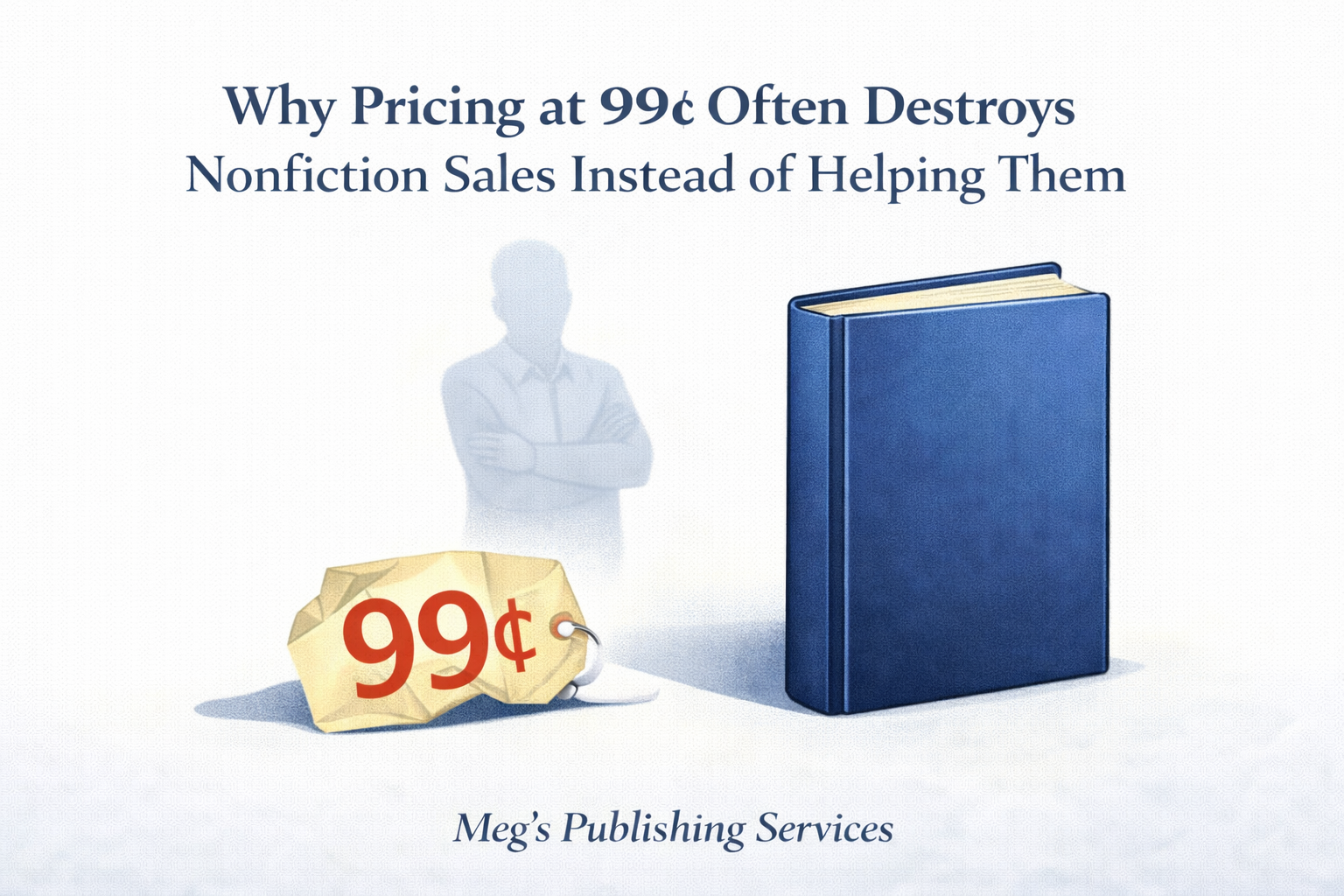
Many authors price their nonfiction book at 99 cents thinking they are being smart. Lower the barrier. Increase volume. Reach more people.
In practice, the opposite usually happens.
For nonfiction, 99 cents often kills momentum instead of creating it.
Low Price Signals Low Value in Nonfiction
Nonfiction is bought for answers, clarity, and expertise. Readers are not just purchasing words. They are purchasing trust.
When a nonfiction book is priced at 99 cents, it sends an unintended signal. It suggests the information is shallow, outdated, or generic. Serious readers assume that if the knowledge were valuable, it would not be priced like an impulse item.
This is not about fairness. It is about perception.
In nonfiction, price is part of the credibility package.
Serious Nonfiction Buyers Are Not Bargain Hunters
People who buy nonfiction are usually trying to solve a problem. They want insight, guidance, or a shortcut to understanding something important.
When the price is extremely low, many of these buyers hesitate. They question the depth of the content. They wonder if the book is recycled blog posts or surface-level advice.
Ironically, higher prices often convert better for nonfiction because they reassure the reader that the author values their own expertise.
Cheap does not feel helpful.
Cheap feels risky.
Why 99 Cents Works for Fiction but Not for Nonfiction
This is where authors mix strategies.
For fiction, especially series fiction, 99 cents can be strategic. It fuels volume, discovery, and binge reading. Fiction readers are often willing to try something new cheaply because the emotional payoff is uncertain.
Nonfiction is different.
Nonfiction readers are not experimenting for entertainment. They are investing in an outcome. That changes buying behavior completely.
What works for fiction volume usually backfires for nonfiction authority.
The Psychology of Expert Pricing
Experts price differently.
They do not price to beg for attention. They price to signal confidence.
A nonfiction book priced intentionally tells the reader, “This information has weight.” That confidence reduces friction more than a low price ever could.
Readers want to trust the guide before they trust the content. Pricing helps establish that trust.
How Underpricing Damages Brand Authority
Your book is not just a product. It is a positioning tool.
When a nonfiction book is underpriced, it can quietly damage:
Speaking opportunities
Consulting credibility
Coaching offers
Professional perception
People may read the book and still hesitate to take the author seriously because the price framed the work as low-stakes.
Raising the price later is possible, but first impressions stick.
What Smart Nonfiction Pricing Actually Does
Smart pricing does not chase maximum volume. It aligns value, authority, and outcome.
A well-priced nonfiction book:
Attracts serious readers
Filters out the wrong audience
Supports the author’s brand
Feels trustworthy before the first page
Selling fewer copies at the right price often creates more opportunity than selling many copies at a price that undermines credibility.
Final Thought
Ninety-nine cents is not neutral. It communicates something whether you intend it to or not.
For nonfiction, it usually communicates the wrong thing.
Pricing is not about generosity. It is about alignment. When price, expertise, and reader expectations agree, sales feel easier and authority compounds.
If you are unsure whether your current pricing supports or quietly sabotages your nonfiction goals, Meg’s Publishing Services helps authors price with strategy, not fear.
You cannot build authority on a foundation that undervalues the work.