

Print Cost Deductions
The Silent Profit Killer Authors Always Forget
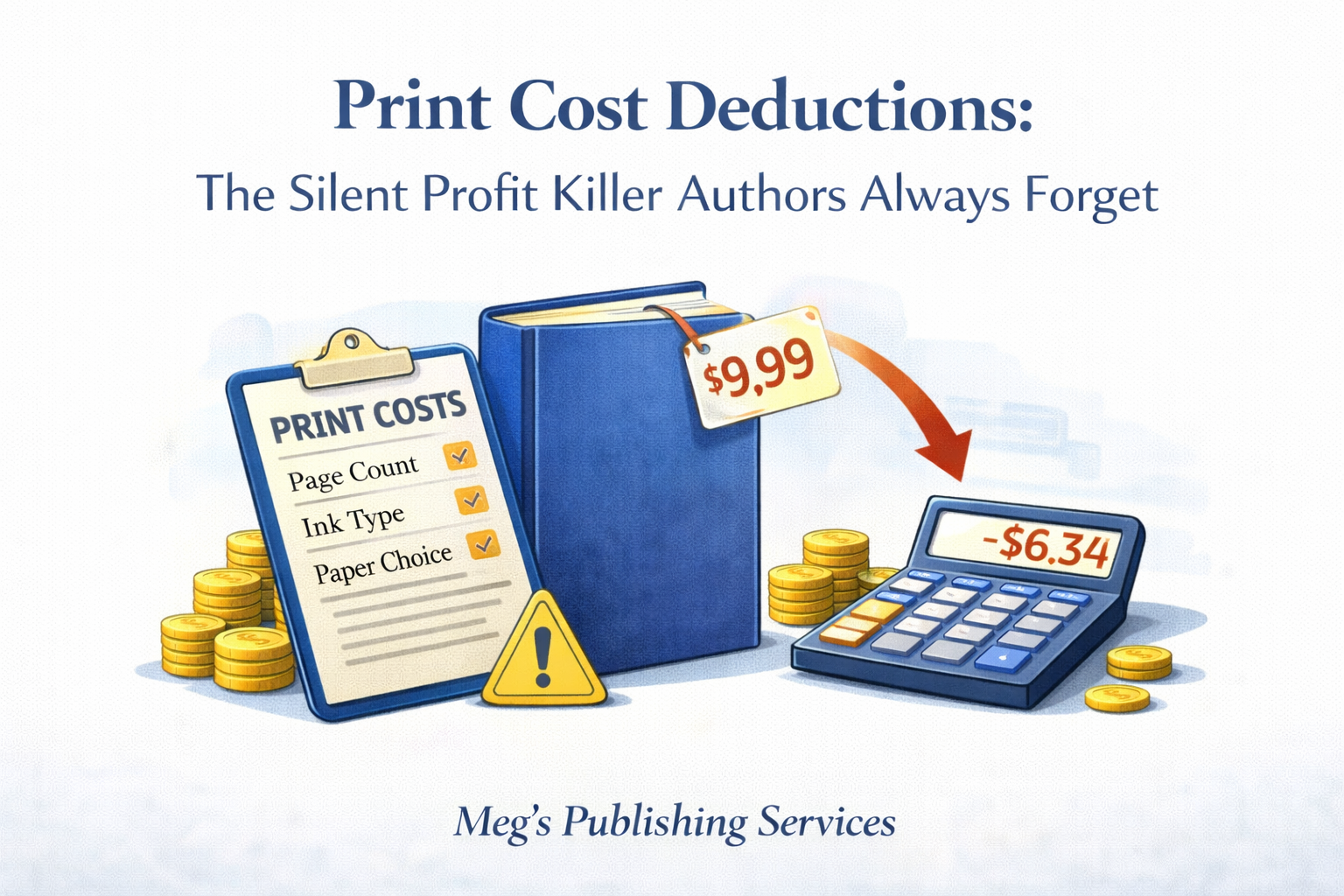
Many authors think pricing is the last step in publishing. They upload the book, pick a price that feels reasonable, and move on.
That is how books quietly lose money.
Print cost deductions are not small details. They are the difference between earning consistently and wondering why sales never translate into income.
Print Cost Is Not a Flat Number
Print cost changes based on how your book is built.
It is affected by page count, ink usage, paper type, trim size, and binding. A longer book costs more to print. A book with heavy ink coverage costs more to print. Certain trim sizes and paper choices increase costs automatically.
Two books priced the same can have very different profit outcomes purely because of production choices made earlier.
This is why authors feel blindsided. The cost was decided long before pricing entered the conversation.
Why KDP Updates Print Costs Regularly
Print costs are not fixed forever.
KDP adjusts print costs to reflect changes in materials, shipping, labor, and manufacturing conditions. These updates are not personal. They are operational.
That means a book that was profitable last year can quietly become less profitable if pricing is not reviewed. Authors who never revisit their numbers slowly lose margin without realizing it.
Print cost drift is real, and ignoring it turns stable books into underperformers.
How Print Costs Are Deducted Before You Earn Anything
Print royalties are calculated after production costs are removed.
The platform starts with your list price.
Print cost is deducted.
What remains is split according to the royalty structure.
If the remaining amount is small, your royalty will be small. If the remaining amount is too small, your book may technically sell while earning almost nothing.
This is not a glitch. It is math.
How to Calculate Profit Before You Publish
Profit should be calculated before the book goes live, not after disappointment sets in.
Authors need to know:
Estimated print cost per copy
Required retailer discounts if applicable
Platform royalty structure
Minimum viable list price
When these numbers are known in advance, pricing becomes strategic instead of emotional.
Guessing leads to underpricing. Underpricing leads to burnout.
Why Many Authors Price Their Print Books Too Low
Authors often price print books using ebook logic. They want affordability. They want competitiveness. They want to “remove friction.”
Print books do not work that way.
Print pricing must cover:
Manufacturing
Distribution
Discounts
Returns if enabled
A reasonable author margin
When prices are set too low, authors may sell books steadily while earning pennies. The book looks successful. The bank account disagrees.
Low pricing feels kind. It is often destructive.
The Pattern That Causes the Most Losses
The most common pattern looks like this: the author sets a low price, sales happen, excitement builds, and then reality hits when payouts arrive.
By the time the problem is noticed, reviews, links, and distribution are already tied to the original price. Fixing it later is possible, but harder than doing it right from the start.
This is why pricing deserves early attention, not last-minute treatment.
Final Thought
Print cost deductions are silent. They do not announce themselves. They simply subtract value every time a book sells.
Authors who understand print costs protect their profit before it leaks away. Authors who ignore them often work harder for less without knowing why.
If you want help calculating print costs properly, setting prices that actually earn, and building books that respect the economics of physical publishing, Meg’s Publishing Services helps authors structure pricing with clarity instead of surprises.
You cannot earn from a system you only half understand.