

Why Going Wide Reduces Your Royalties
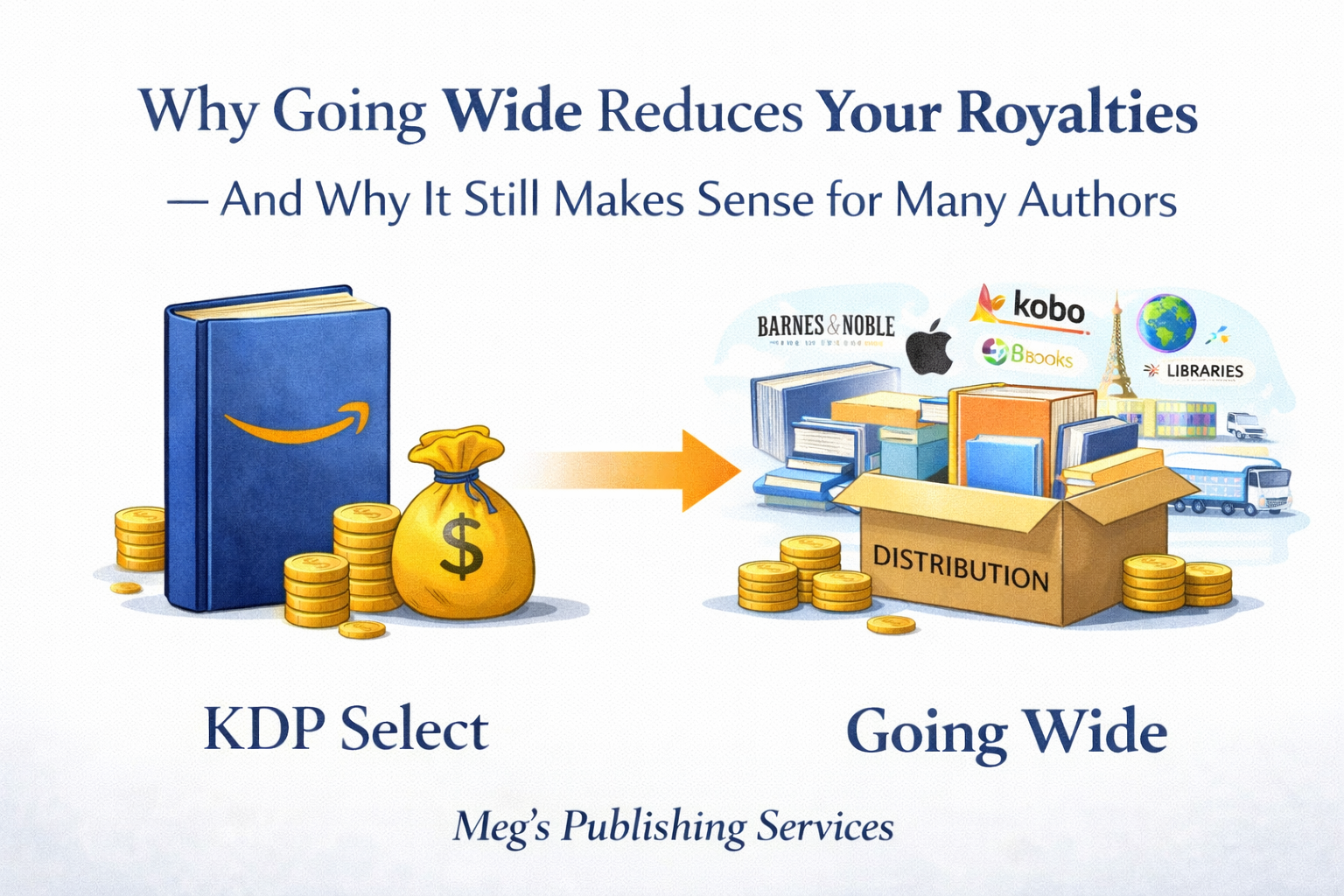
Many authors get stuck on one number: royalty percentage. They assume the goal of publishing is to keep that number as high as possible, and anything that reduces it must be a bad move.
That mindset quietly limits growth.
Going wide often reduces per-copy royalties. That part is true. The mistake is assuming that lower royalties automatically mean worse outcomes.
Why Broad Distribution Comes With Thinner Margins
Wide distribution relies on systems built for the book trade. IngramSpark and similar distributors are designed to serve bookstores, libraries, schools, and international markets. Those systems involve more participants, more logistics, and more costs than direct online retail.
Because of that, margins are thinner. Print costs are higher. Discounts are expected. Royalties per copy look smaller on paper.
That reduction is not inefficiency. It is the cost of access.
Why Bookstores Demand Discounts
Bookstores do not operate on goodwill. They operate on math.
They need wholesale discounts to cover rent, staff, utilities, unsold inventory, and returns. Without those discounts, carrying a book simply does not make financial sense for them.
Wide distribution meets bookstores where they already are. That means accepting the economic rules they work under. High royalty percentages are not compatible with physical retail.
Why “Wide” Is an Exposure Engine, Not a Margin Play
Going wide is not about squeezing the highest profit from each individual sale. It is about placing the book in systems that increase legitimacy, reach, and long-term visibility.
Wide distribution creates:
Physical shelf presence
Library circulation
Institutional discovery
International availability
Brand credibility beyond one platform
Each of these expands who can encounter the book, even if the payout per copy is smaller.
KDP Select vs a Wide Strategy
KDP Select concentrates power. It rewards exclusivity with higher visibility inside Amazon and access to specific promotional tools.
A wide strategy disperses power. It trades short-term platform advantages for broader reach across many channels.
Neither approach is inherently better. They serve different priorities. Authors focused on maximizing Amazon income often choose Select. Authors focused on longevity, credibility, and reach often choose wide.
Problems arise when authors chase both outcomes at the same time without understanding the trade-offs.
Short-Term Royalties vs Long-Term Value
High royalties feel good in the short term. Wide distribution often pays off in slower, less obvious ways.
A book discovered in a library can lead to bulk sales. A bookstore placement can increase perceived authority. International availability can open doors to speaking, partnerships, or translations.
These outcomes are harder to measure than royalty dashboards, but they compound over time.
Why Maximizing Percentage Is the Wrong Goal
Royalty percentage is not income. Net earnings are.
A lower percentage across a wider, healthier ecosystem can outperform a higher percentage locked inside a single channel. The right question is not “How high is the royalty?” but “What does this setup allow my book to do?”
When authors stop optimizing for percentage alone, better strategic decisions follow.
Final Thought
Going wide reduces royalties per copy. That is not a secret. It is a trade-off.
For some authors, that trade-off is unnecessary. For others, it is exactly what unlocks growth, credibility, and opportunity.
Understanding which category you fall into is what turns publishing from guesswork into strategy.
If you want help deciding whether wide distribution supports your long-term goals or whether a focused approach makes more sense right now, Meg’s Publishing Services helps authors choose strategies based on clarity, not fear of lower percentages.
You cannot earn confidently from a system you do not fully understand.