

Ebook vs Paperback Royalties
The Shocking Difference Most Authors Don’t Know
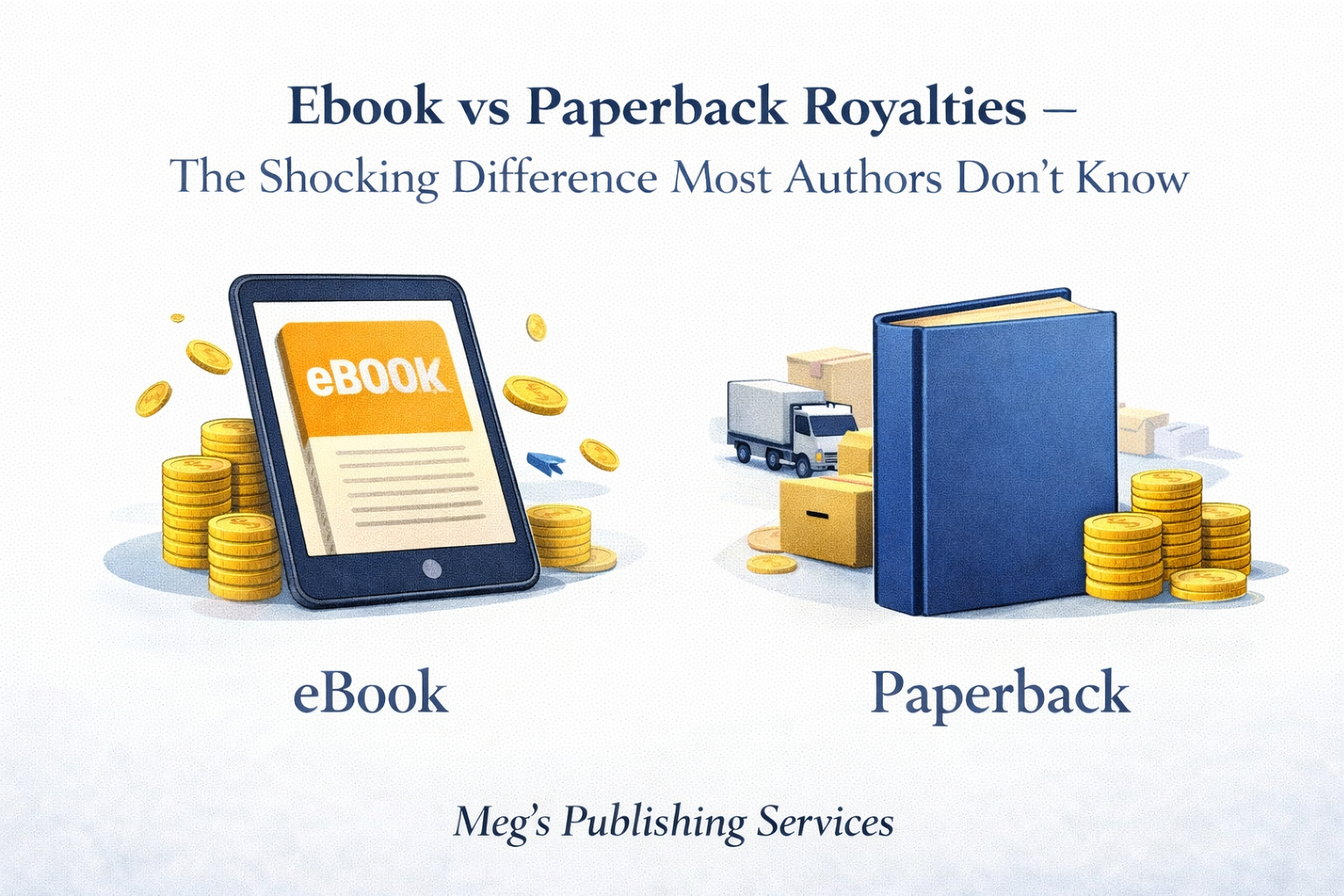
Most authors assume royalties behave the same across formats. They don’t. Ebook and paperback royalties are driven by completely different cost structures, and misunderstanding that difference leads to bad pricing, weak income, and a lot of unnecessary frustration.
Once you see how the math actually works, many confusing publishing outcomes suddenly make sense.
Digital Books Are Cheaper to Distribute, So Royalties Are Higher
Ebooks are digital files. There is no paper, no ink, no binding, no shipping, and no storage. Once the file exists, the cost of delivering it to the reader is minimal.
That is why ebook royalties are typically higher. Platforms can afford to pay authors a larger percentage because there are fewer real-world costs to recover. Aside from platform fees and delivery charges tied to file size, the margin is mostly digital.
This is why authors often see higher per-unit earnings on ebooks, even at lower prices.
Print Books Carry Real Manufacturing and Shipping Costs
Paperback books are physical products. Every copy must be printed, bound, and shipped before anyone gets paid.
Print royalties are calculated after:
Printing costs
Paper and ink usage
Binding and finishing
Shipping and handling
Those costs are deducted before the author sees anything. That is not a platform issue. It is physics.
This is why print royalties are lower per copy, even when the list price is higher.
Why Nonfiction Often Earns More From Print
Nonfiction readers often want physical books. They highlight. They write notes. They reference pages. They display the book on desks or shelves.
Because of that behavior, nonfiction books can:
Sustain higher print prices
Justify larger trim sizes
Sell well in paperback or hardcover
Perform in bookstores, libraries, and bulk orders
Even with lower per-unit royalties, nonfiction authors can earn more overall from print because buyers are willing to pay more for a physical product.
Print becomes a value signal, not just a format.
Why Fiction Often Earns More From Ebooks
Fiction readers prioritize convenience and volume. They read fast, read often, and care less about owning a physical copy unless the book is collectible or giftable.
Ebooks work well for fiction because:
Prices can stay competitive
Royalties remain high relative to cost
Readers buy multiple titles quickly
Series consumption is easier digitally
For many fiction authors, ebooks generate stronger, more consistent income than paperbacks, even if print editions still matter for visibility or branding.
The Hybrid Strategy Most Authors Miss
Smart authors do not choose one format emotionally. They assign roles.
A common hybrid approach looks like this:
Ebook priced for accessibility and volume
Paperback priced for perceived value and credibility
Hardcover or special formats used selectively
Each format is priced based on how readers actually use it, not on keeping prices “equal.”
Trying to force the same earning logic across formats usually fails.
What Authors Get Wrong About Royalties
Authors often assume:
Higher price always means higher profit
Print should earn the same as digital
One format should carry the entire income load
In reality, royalties are format-specific outcomes. Each format answers a different reader need and follows different economic rules.
When authors stop comparing ebook and paperback royalties as if they should match, pricing decisions become clearer and income becomes more predictable.
Final Thought
Ebook and paperback royalties are not competing systems. They are complementary ones.
Digital favors scale and margin.
Print favors value and perception.
Authors who understand how each format earns stop being shocked by payouts and start building income intentionally.
If you want help pricing your ebook and print formats so they work together instead of against each other, Meg’s Publishing Services helps authors structure royalties based on real reader behavior and real publishing economics.
Understanding the money is how publishing stops feeling random and starts feeling sustainable.