

Owning vs Renting Your ISBN
The Single Decision That Follows Your Book for Life
Most authors spend weeks choosing a title.
They obsess over the cover.
They debate pricing endlessly.
Then they rush the ISBN decision in five minutes.
That shortcut follows the book forever.
What “owning” an ISBN actually means
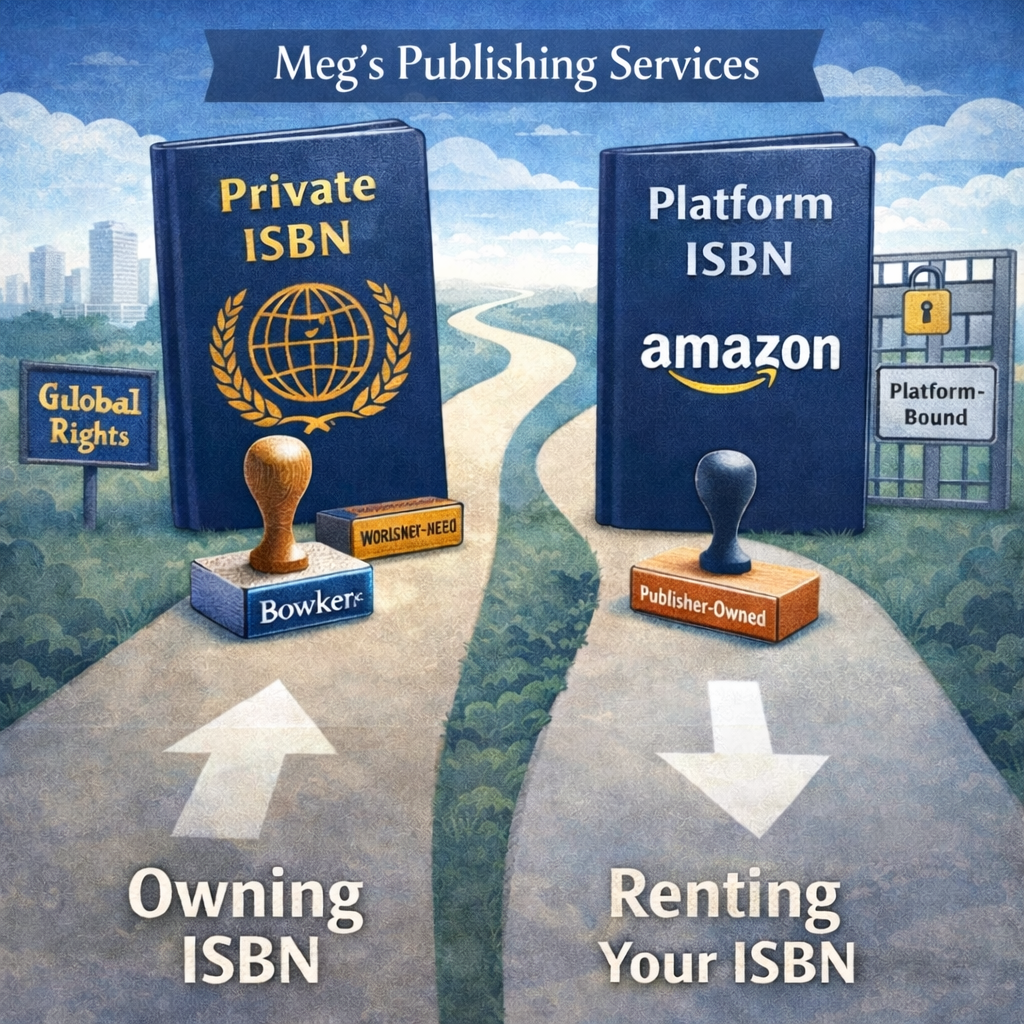
Owning your ISBN means you are the publisher of record.
Not a platform.
Not a retailer.
Not a distributor.
Your name or imprint is permanently attached to the book’s identity across:
Databases
Retail systems
Libraries
Distributors
International catalogs
That ownership does not expire.
It does not change when platforms change.
It does not shift when trends move.
It is structural.
What “renting” an ISBN really is
When you use a free or platform-issued ISBN, you are not owning anything.
You are borrowing visibility inside someone else’s system.
The book still sells.
The book still exists.
But the identity belongs to whoever issued the ISBN.
That is why authors wake up later to discover:
Their publisher name is not theirs
Distribution options are limited
Expansion requires workarounds
Rights conversations become complicated
Nothing is broken.
Everything is constrained.
Convenience always feels cheaper at the beginning
Renting an ISBN feels smart early on.
No upfront cost.
No extra steps.
Instant publishing.
Ownership feels unnecessary when the only goal is “get the book live.”
The problem is that books do not stay small.
Authors grow.
Ideas expand.
Series happen.
Opportunities appear.
The ISBN decision stays exactly where it was made.
Why this choice affects long-term rights
ISBN ownership touches things authors rarely consider upfront:
Who is recognized as the publisher globally
How cleanly rights can be licensed
Whether foreign partners take the book seriously
How audiobooks and print editions are tracked
How a catalog scales across years
These are not launch problems.
They are career problems.
That is why they catch authors off guard.
International distribution makes this painfully obvious
Global systems do not care about intentions.
They care about records.
An owned ISBN travels cleanly.
A rented ISBN raises questions.
Questions slow deals.
Questions reduce trust.
Questions cost opportunities.
International expansion exposes every shortcut taken earlier.
The decision most authors wish they had slowed down for
Owning vs renting an ISBN is not about morality or “doing it right.”
It is about deciding:
Whether your book is a long-term asset
Or a short-term upload
Once published, reversing this decision often means:
Republishing
Losing reviews
Breaking links
Starting over in systems that remember everything
That is not a lesson you want to learn late.
Final thought
Books that last are owned, not borrowed.
Identity is either yours or it isn’t.
If you are unsure whether your ISBN setup gives you real ownership or silent limitations, pause before publishing further.
If you want your ISBN and book identity set up with long-term control in mind, reach out to Meg’s Publishing Services.
We help authors make decisions they will not regret years later.