

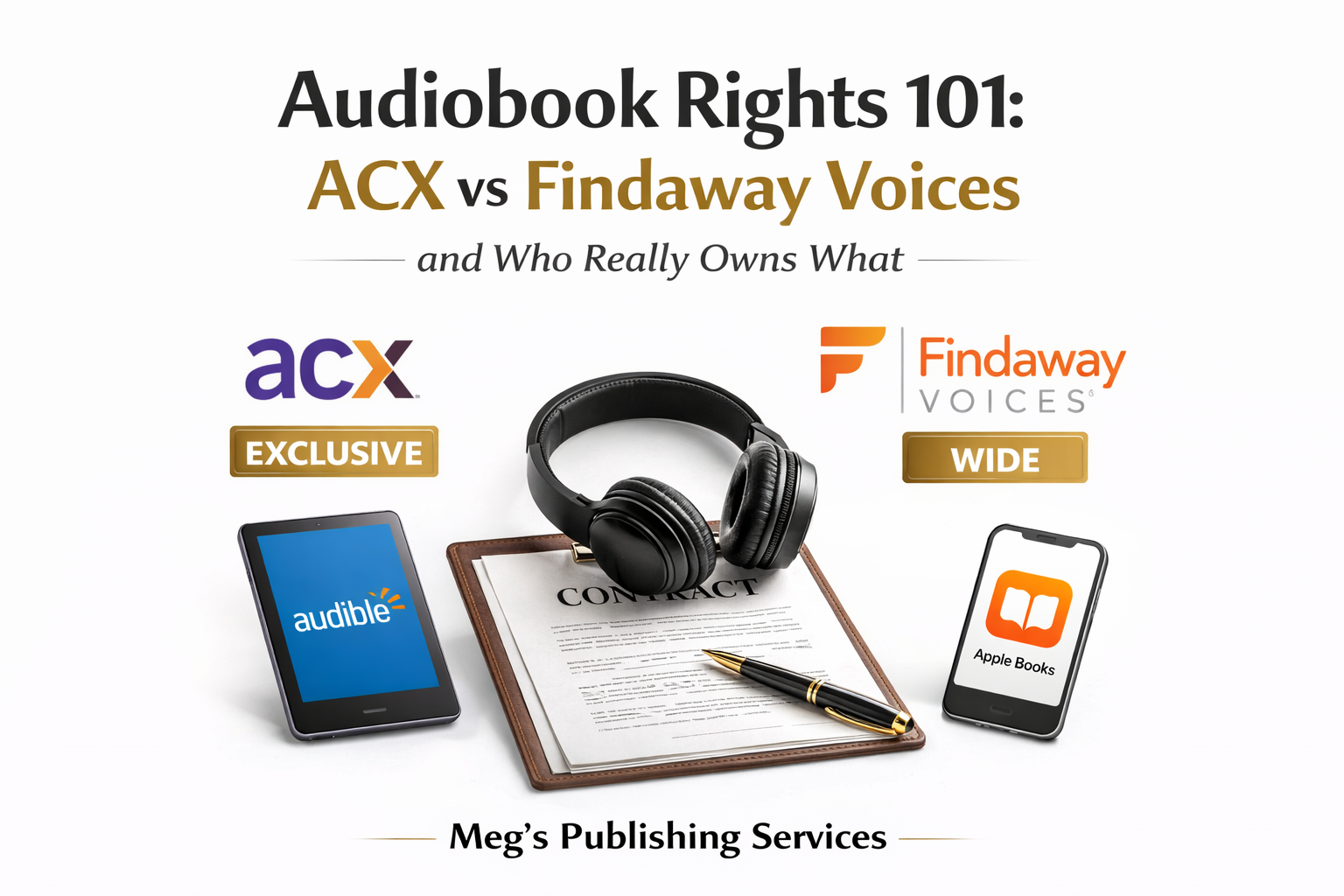
Audiobook Rights 101: ACX vs Findaway Voices and Who Really Owns What
Audiobooks feel harmless when authors first approach them.
You already have the book. You’re not changing the words. You’re just letting someone read it aloud. How complicated can it be?
Complicated enough to quietly lock authors out of their own work for years — sometimes without them realizing it until an opportunity shows up and they can’t say yes.
Audiobook contracts are where long-term damage happens politely. No drama. No warnings. Just clauses that sit there, waiting.
So let’s slow this down and talk like adults who care about the future of their intellectual property.
The two platforms most authors hear about — and what they don’t tell you upfront
Most audiobook journeys funnel authors toward two names:
ACX
Findaway Voices
They look similar on the surface. Upload a book. Get narration. Distribute widely. Earn royalties.
Underneath, they operate on very different philosophies about control.
And control is the real currency here.
Exclusive vs non-exclusive: the choice that follows you for years
This is where most authors make a decision too fast.
Exclusive contracts (most commonly associated with ACX) offer higher royalty percentages in exchange for locking your audiobook into one ecosystem for a fixed period. That ecosystem centers heavily around Audible.
On paper, exclusivity looks attractive. Higher royalty. Simpler setup. Familiar brand.
In practice, it means:
You cannot distribute that audiobook anywhere else
You cannot pivot if the platform underperforms
You cannot renegotiate when your audience grows
You wait out the full term before regaining freedom
Non-exclusive contracts trade a slightly lower royalty for flexibility. You can distribute across multiple retailers and libraries, adjust strategy over time, and avoid having your audiobook’s fate tied to a single gatekeeper.
Higher percentage today versus optionality tomorrow. That’s the real trade.
Royalty share vs PFH: where authors confuse cost with risk
Audiobook production isn’t cheap, so many authors opt for royalty share deals, where the narrator is paid from future earnings instead of upfront.
Here’s what gets missed: royalty share isn’t just a payment method. It’s a partnership.
That partnership can:
Limit your control over pricing
Complicate rights transfers later
Make exits or relaunches messy
Lock you into long contracts you didn’t negotiate hard enough
PFH (Pay-Per-Finished-Hour) deals feel expensive upfront, but they often give you something far more valuable: clarity. You pay once. You own cleanly. You decide distribution.
Authors who plan long-term usually regret avoiding PFH more than they regret paying for it.
Distribution reach: where your audiobook can — and cannot — go
Audiobooks don’t live in one place anymore.
Beyond Audible, listeners are buying and borrowing audiobooks through platforms like Apple Books, Spotify partnerships, library systems, and subscription services most authors don’t even think about yet.
Findaway Voices was built with this reality in mind: wide distribution, library access, international reach, and flexibility as new channels emerge.
ACX was built around a dominant marketplace model.
Neither is inherently evil. But they serve different kinds of authors.
If your audience is still small and you want simplicity, exclusivity may feel comfortable. If you’re building a brand, a backlist, or a long-term IP portfolio, narrow distribution becomes a liability.
Why authors must read ACX contracts slowly — not casually
ACX contracts are not written to trick you. They’re written to protect the platform.
Which means the burden of protection falls on the author.
Key issues authors skim past:
Length of exclusivity
What happens if production stalls
How rights revert (or don’t)
What control you retain over pricing and promos
How future editions are handled
Once signed, those terms don’t care how much you’ve grown since.
Long-term rights control: the part no one markets, but everyone regrets
Audiobooks are no longer a “bonus format.” For many nonfiction authors, they become the primary way readers engage.
That makes audiobook rights strategic assets.
When your book gets traction, opportunities appear:
Corporate licensing
Course integrations
Platform partnerships
Translations and adaptations
Brand-driven re-releases
All of those require clean rights.
Authors who signed fast often discover they can’t move when momentum finally shows up.
Why this topic elevates your brand instantly
Most service providers stop at “Let’s get your audiobook live.”
Professionals ask, “Where do you want this book to be in five years?”
Authors feel the difference immediately.
Because audiobook rights aren’t about narration. They’re about leverage.
The authors who stay in control aren’t the loudest or the fastest.
They’re the ones who read carefully, choose intentionally, and refuse to trade their future for convenience.
That’s not overthinking.
That’s publishing like a business.