

When the Right BISAC Code Still Sends Your Book Into the Wrong Amazon Category
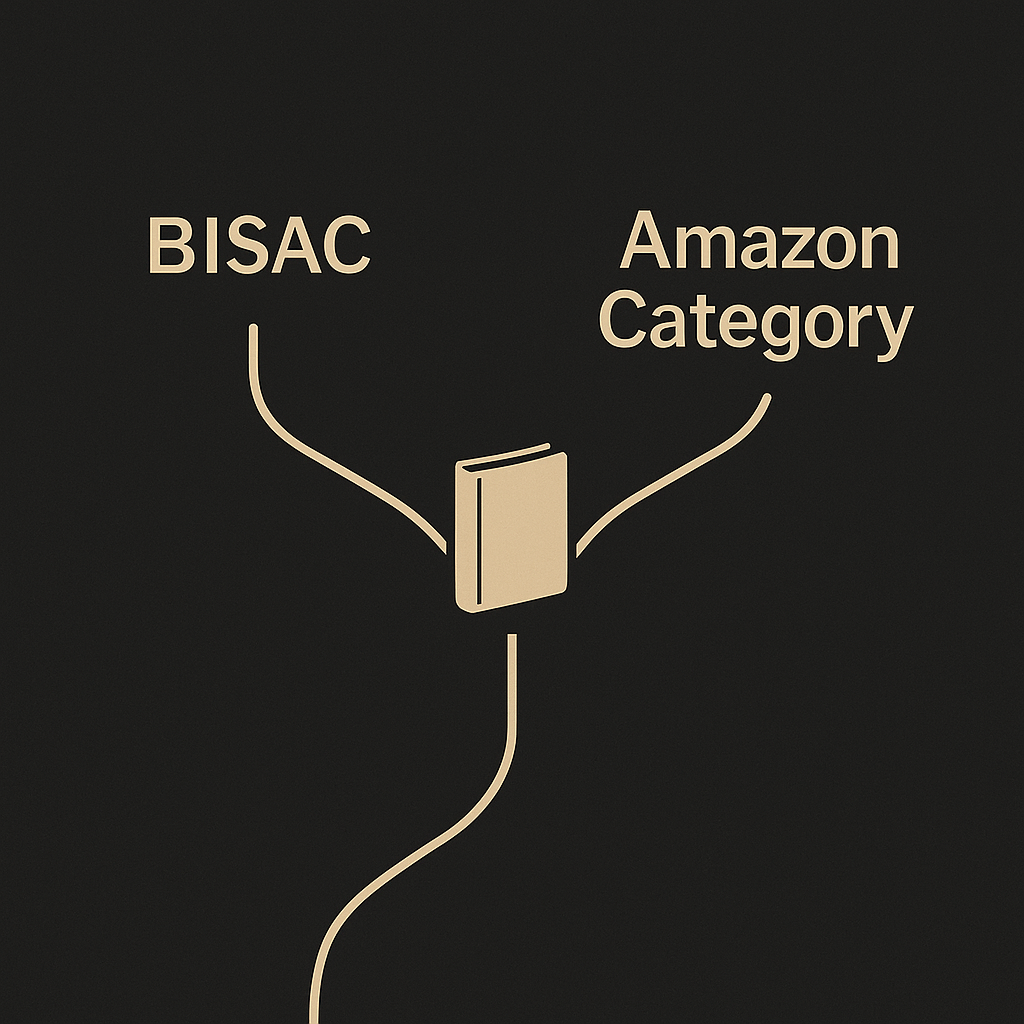
And Why That One Mismatch Can Quietly Erase Your Visibility
Not long ago, I was reviewing a book setup for an author who had done everything by the book. She had chosen a completely accurate BISAC code. Her genre alignment was strong. Her metadata made sense. Yet Amazon had placed her title inside a category that had nothing to do with the reader she wrote for.
Her first question was the same one most authors ask in that moment.
“I chose the right BISAC code. How did this still go wrong?”
The answer is simple and stressful at the same time.
A correct BISAC code does not guarantee correct Amazon shelving. These two systems speak different languages, and Amazon does not always translate the way you expect.
This is where visibility breaks down even when you did everything “right.”
Why This Problem Happens More Often Than Authors Realize
BISAC is a publishing standard.
Amazon categories are algorithmic.
These two systems overlap, but they are not twins.
BISAC tells Amazon the general ecosystem your book belongs to. Amazon then uses that signal along with your keywords, cover cues, description, traffic patterns, and early reader behavior to decide where the book should actually sit.
If any of those signals contradict your BISAC choice, Amazon will ignore the BISAC and follow the stronger signal.
That means you can choose the perfect BISAC and still end up shelved in a section that has nothing to do with your audience. When that happens, your book becomes invisible long before any marketing reaches the reader.
How a Small Mismatch Turns Into a Big Visibility Loss
The danger of misplacement is quiet but powerful. Amazon is trying to route your book into the ecosystem that makes the most sense based on its interpretation of your signals. When the signals are inconsistent, the system places the book where the patterns seem closest.
Here is what happens next.
The wrong readers see the book
They are not looking for your tone, your genre, or your promise.
Those readers bounce quickly
Bounce is measured within seconds. It sends Amazon a very clear message that the book did not satisfy the search intent.
Bounce lowers trust
Amazon becomes hesitant to show your book to new readers because the data suggests poor relevance.
Impressions drop
Your book moves deeper down the search pages where almost no one scrolls.
Recommendation loops weaken
Amazon stops routing your book through strong reader pathways because it is unsure of where your title actually belongs.
A single misfiled category starts a chain reaction that suppresses visibility across the entire platform.
Why the Right BISAC Code Is Not Enough
Authors often assume BISAC accuracy guarantees category accuracy.
It doesn’t.
Here is the part that surprises many writers.
BISAC codes are broad.
Amazon categories are granular.
You might choose a BISAC code like “FICTION/ ROMANCE/ CONTEMPORARY,” which is technically perfect. But Amazon has dozens of Romance subcategories, and the system will choose the placement that matches your keywords and cover design more than the BISAC itself.
That means:
a wrong keyword can pull you into a category you never intended
a cover cue can imply a different subgenre
a description focusing on the wrong emotional tone can mislead the algorithm
a burst of early traffic from the wrong readers can alter your category assignment
BISAC is the map. Amazon categories are the street-level placement. You need both to match, or the algorithm gets confused.
How to Protect Your Book From Category Misplacement
There is no single trick that forces Amazon to choose the correct category. But there is a pattern that Amazon always rewards.
Clarity.
Your signals must point in the same direction.
Focus on strengthening the elements that Amazon uses to interpret your BISAC:
choose keywords that reinforce the BISAC intent
write a description that mirrors the genre expectations BISAC represents
ensure your cover signals align with the reader your BISAC code implies
select categories that function as natural extensions of the BISAC ecosystem
avoid trying to blend audiences unless the book is intentionally hybrid
Amazon responds to consistency. When every signal supports the same identity, category placement becomes accurate and stable.
Final Thought
Choosing the right BISAC code is a smart beginning. Choosing the right Amazon category is what makes your book discoverable.
When these two systems align, your visibility strengthens naturally.
When they fight each other, the algorithm has no idea where your book belongs, and it shelves you in the wrong section without hesitation.
Your goal is not to trick Amazon. Your goal is to help it understand you.
Because once the system knows exactly where to place your book, the right readers finally find it. That is the real beginning of discoverability.