

ISBN Metadata: The Silent Force That Makes or Breaks Discoverability
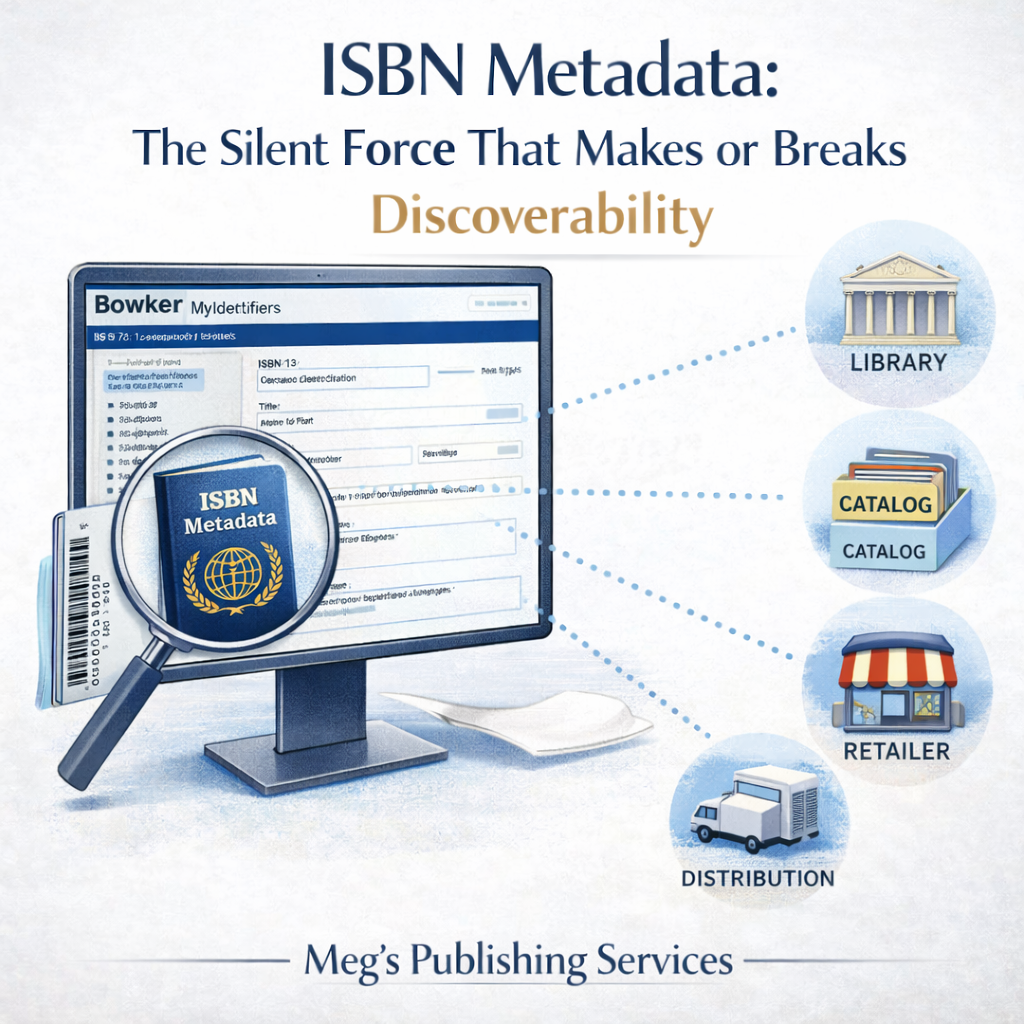
Most authors think the work ends once they “get an ISBN.”
Number assigned.
Book uploaded.
Done.
That assumption quietly kills discoverability.
An ISBN without accurate, updated metadata is like a passport with the wrong name, wrong destination, and outdated photo. The number exists, but the system does not know how to place the book correctly.
What ISBN metadata actually is
ISBN metadata is the official data record attached to your book’s identity.
It includes:
Title and subtitle
Author and contributor names
Publisher name
Format and edition
Subject categories
Language
Publication date
Description and keywords
This is not Amazon metadata.
This lives at the industry level.
Libraries, distributors, bookstores, wholesalers, and catalogs pull from ISBN metadata sources to decide:
Where a book belongs
How it should be classified
Whether it fits their inventory or collection
That decision happens before ads, before reviews, before sales.
Why “I have an ISBN” is not enough
Here is the mistake most authors make.
They buy or assign an ISBN.
They never update the metadata.
They assume platforms will figure it out.
Platforms do not fix weak records.
They inherit them.
If the metadata is thin, outdated, or misaligned, the book gets:
Misclassified
Poorly indexed
Ignored by libraries
Excluded from catalogs
Treated as low-priority inventory
Nothing breaks.
The book just stays invisible.
Bowker metadata is not optional admin work
Bowker metadata feeds the global book ecosystem.
That includes:
Library databases
Bookstore ordering systems
Academic catalogs
International distributors
Retail backends outside Amazon
When authors ignore Bowker updates, they freeze their book’s identity at launch day, even as the book evolves.
New subtitle.
New positioning.
New edition.
New audience.
Same old metadata.
That mismatch confuses systems that depend on precision.
How bad metadata blocks discoverability quietly
Discoverability is not only about search.
It is about placement.
Poor ISBN metadata causes:
Incorrect shelving categories
Weak subject tagging
Reduced trust signals
Missed inclusion in curated lists
Rejection from institutional buyers
No rejection email comes.
The book is simply never surfaced.
That silence costs more than visible failure.
Why authors rarely connect the dots
Most authors focus on:
Amazon keywords
Categories
Ads
Reviews
All important.
But ISBN metadata works upstream of all that.
It influences:
Where the book is allowed to appear
Which systems will even consider it
How easily it travels beyond one platform
When discoverability is capped, authors assume marketing failed. In reality, the book was never positioned properly to be discovered.
When metadata must be reviewed or updated
You should revisit ISBN metadata when:
You change a subtitle
You release a new edition
You expand distribution
You reposition the book
You target libraries or bookstores
You plan international reach
Metadata is not set-and-forget.
It is part of maintenance.
Final thought
ISBNs give books identity.
Metadata gives that identity direction.
Without accurate metadata, even the best book becomes hard to place, hard to trust, and easy to ignore.
If you are serious about discoverability beyond one platform, ISBN metadata is not optional work.
If you want your ISBN metadata reviewed, corrected, and aligned for real distribution, reach out to Meg’s Publishing Services.
We help authors make sure their books are not invisible by design.