

Category Drift & How to Fix It
When Amazon quietly moves your book into a weaker category — and what to do when you notice
Category drift never announces itself.
There’s no email. No warning. No notification waiting on your dashboard.
Most authors notice it the same way you notice something’s wrong with your phone battery.
Nothing dramatic happened. Just suddenly, it doesn’t last the way it used to. Sales feel slower than they should. Rankings don’t bounce back the way they once did. New readers arrive… and leave.
Your book is still selling. It just isn’t moving.
Nothing broke overnight.
Your book simply drifted.
What category drift actually looks like
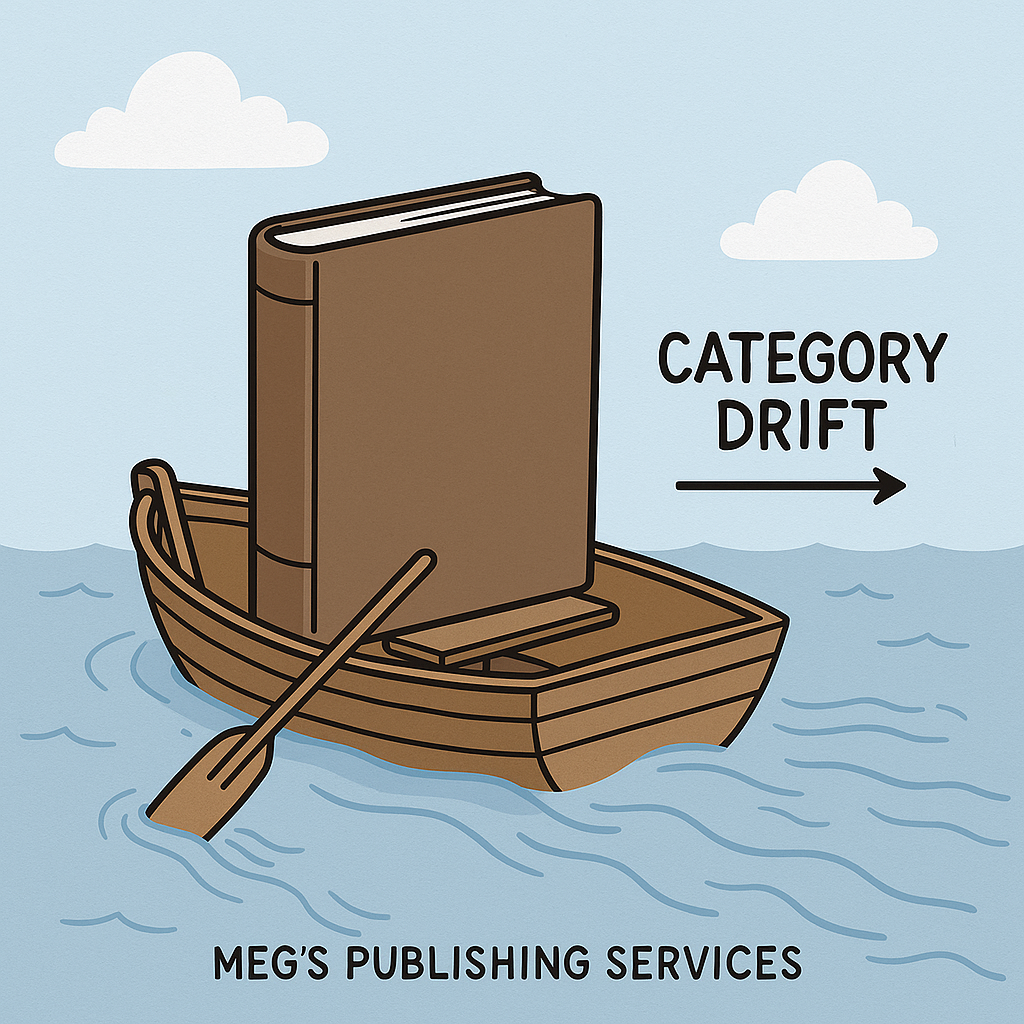
Think of launching your book like placing a boat into a steady current.
At first, everything feels aligned. The water is calm. The direction makes sense. But over time, subtle forces start nudging the boat.
A keyword tweak here.
A bounce there.
A new competitor enters the space.
Reader behavior shifts in ways you don’t immediately notice.
None of these moments feel important on their own. But together, they change the current.
And one day, without realizing when it happened, your book is no longer where you launched it.
That’s category drift.
Why Amazon allows drift
Amazon isn’t being careless.
It’s being responsive.
The algorithm continuously reassesses where your book appears to fit best based on live signals:
who clicks
who leaves quickly
who buys
what your also-boughts look like
which keywords trigger impressions
what readers do after landing on your page
When those signals shift—even slightly—Amazon adjusts placement.
Not aggressively. Not obviously.
Just enough to “optimize” what it thinks is a better match.
The issue is simple:
Amazon optimizes for patterns, not for your long-term strategy.
How authors unintentionally cause their own drift
Category drift is rarely random.
It usually begins with reasonable decisions.
Broadening keywords to “reach more people”
Testing a slightly different category
Running a promotion that attracts mismatched traffic
Getting bundled with a book that serves a different reader
Updating a cover or description that changes the emotional signal
Each action feels harmless but Amazon doesn’t evaluate them separately.
It aggregates them.
Over time, your book stops looking like a strong match for its original category and starts looking like an acceptable match somewhere else.
That “somewhere else” is often weaker.
Why drift hurts even when sales don’t collapse
This is where many authors get confused.
Your book may still sell but it sells with more effort.
You start noticing:
fewer organic impressions
weaker recommendation loops
slower ranking recovery
inconsistent visibility
growing dependence on external traffic
That’s because drift typically moves books into categories with:
lower buyer intent
less aligned readers
weaker also-bought ecosystems
Your book hasn’t failed.
It’s just swimming against the current.
How to correct drift (without fighting the algorithm)
You don’t fix category drift by forcing Amazon’s hand.
You fix it by restoring clarity.
Amazon responds when signals become consistent again.
That means calmly reassessing whether:
your keywords still reflect your core reader
your description reinforces the same promise
your cover signals the correct emotional category
your traffic sources are aligned
your also-boughts make sense
Think of it as steering the boat back into alignment, not jerking the wheel and hoping for the best.
Small, aligned corrections outperform dramatic resets every time.
Three things to remember about category drift
1. Drift is gradual, not punitive
Amazon isn’t pushing your book away.
It’s responding to mixed signals.
2. You feel drift before you see it
Pay attention to friction, not just rankings.
3. Consistency pulls books back faster than force
Clear signals beat aggressive changes.
Final thought
Category drift is one of the most common reasons authors feel like their book “lost momentum for no reason.”
There was a reason. It just happened quietly.
The good news is this: drift is reversible.
When your signals realign, Amazon recalibrates.
Your book re-enters stronger ecosystems.
Visibility steadies.
Growth feels less exhausting.
You don’t need to relaunch, nor do you need to panic.
You just need to guide the current back in your favor.
If this clarified things for you, there’s more where that came from. This post gives you the insight, but the practical tools live in the Author Candy Shop — focused, no-fluff resources designed to help you fix what’s actually holding your book back.